
Project MUSE For Instructors
Your Trusted Partner for Teaching in the Humanities and Social Sciences
Project MUSE connects educators to a world of interdisciplinary, peer-reviewed scholarship from over 400 nonprofit publishers. Our powerful, easy-to-use platform helps you enrich your courses, engage students, and connect to quality books and journals in your field. Our goal is to sustain the scholarly publishing ecosystem and grow our collective knowledge. Enhancing the discoverability of high-quality scholarship in the world is the first step to making it a better, more curious place.
We provide benefits to help instructors like you educate and lead world-class, interdisciplinary academics in social sciences and humanities.
What You’ll Find on MUSE;
- Content for Courses and Research
- 800+ journals and 100,000+ books from top university presses and nonprofit publishers
- Multidisciplinary content in history, literature, political science, gender studies, and much more
- Open Access resources
- Resources for online and hybrid teaching and learning
- Platform Features for Teaching
- 100% full-text content with no embargoes
- DRM-free, unlimited usage, printing, and downloading
- Mobile-friendly navigability and accessibility compliance
- Seamless search across journals, books, and unique digital products
- MyMUSE tools to save, export, and share citations with students
Book Spotlight
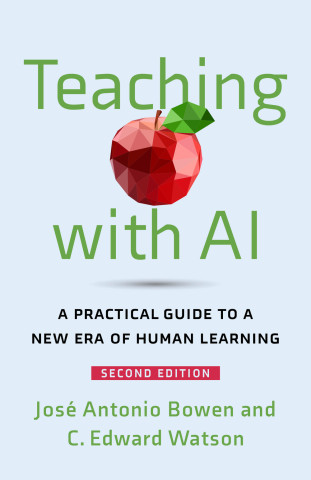
In this practical guide, teachers will discover how to harness and manage artificial intelligence (AI) as a powerful teaching tool. José Antonio Bowen and C. Edward Watson present emerging research on AI’s seismic changes in schools and the workplace and provide invaluable insights into what AI can accomplish in the classroom and beyond.
By learning how to use new AI tools and resources, educators will gain the confidence to navigate the challenges and seize the opportunities presented by AI. This comprehensive guide offers practical suggestions for integrating AI effectively into teaching and learning environments.
Open Access Resources on MUSE
Project MUSE hosts over 6,000 OA books and 100+ OA journals from trusted scholarly publishers. With no paywalls, login requirements, or usage limits, OA content on MUSE is ideal for integrating into classroom reading lists. Explore Open Access on MUSE to find resources to support your classroom reading lists and assignments.
Online Teaching & Learning Resources
Project MUSE hosts a variety of books and articles focused on online teaching, distance learning, and many other topics on higher education and technology. This practical content helps instructors facilitate online and hybrid learning environments.
Content for Courses & Research
For nearly 30 years, Project MUSE has been a trusted and reliable aggregator of humanities and social sciences content from many of the world's leading university presses and other non-profit scholarly publishers. Learn more about the Project MUSE story.
The MUSE platform offers high-quality, peer-reviewed content from over 400 non-profit publishers, which includes more than 800 journals and over 100,000 books. To help you more easily discover content for your course and research needs, we have developed the following subject-specific search results.
Teaching & Content Alerts
Project MUSE continually updates this page with information and tools to support instructors. Please sign up for email alerts to stay connected.
As an online resource, Project MUSE offers several tools to support remote teaching. By creating a free MyMUSE account, instructors can assign journal articles by sharing direct links with students or by compiling a group of related citations. Using the “Save Citations” and “Export Saved Citations” features, teachers can conveniently email curated lists to their classes.
MUSE in Focus
Looking for course syllabus inspiration?
https://about.muse.jhu.edu/muse-in-focus/
“MUSE in Focus” is a series of curated resources from participating publishers designed to contribute interdisciplinary, scholarly context to current events and issues. Each “MUSE in Focus” project is assembled by MUSE’s content development team in collaboration with publishers, editors, and top scholars to provide an interdisciplinary survey of scholarship for researchers, instructors, and general readers alike.
The series includes downloadable bibliographies in multiple formats to enable easy citation, inclusion in syllabi, and integration into other bibliographies or reading lists.